

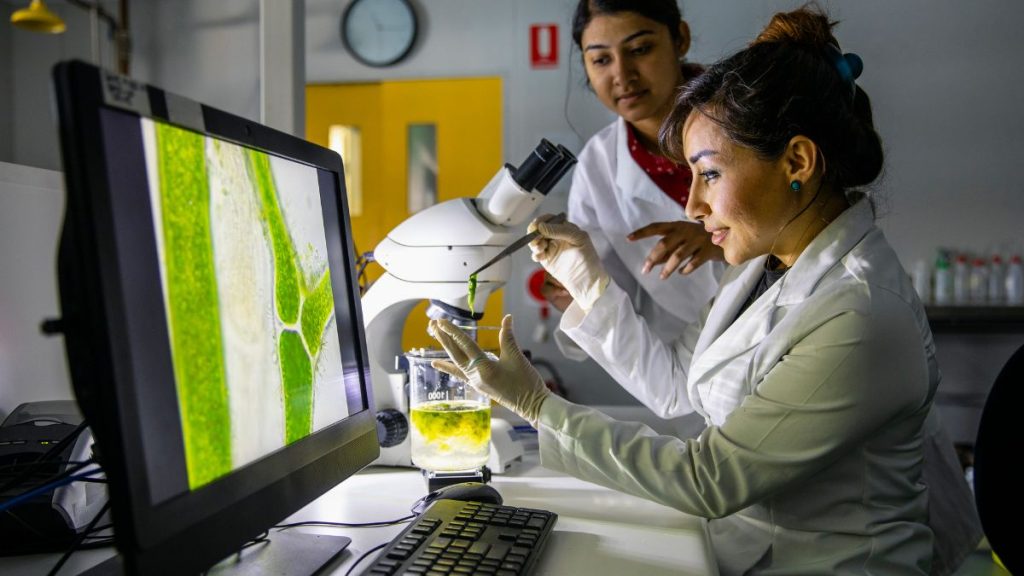
National Science Week celebrates the wonder of scientific discovery and the brilliant minds who push the boundaries of human knowledge. But science careers aren’t just for people who fit one particular mould. Every Career Cluster contains fascinating scientific pathways, each offering unique ways to contribute to our understanding of the world.
Whether you see yourself as more naturally suited to hands-on problem-solving, innovative design thinking, or helping people directly, there’s a place for you in the scientific community. The future of science needs people who can connect discoveries to real-world applications, communicate complex ideas clearly, and ensure that scientific advances benefit everyone in society.
Let’s take a look at some of the rapidly growing and evolving science careers across all six Career Clusters, including some roles you’ve probably never heard of but might find absolutely fascinating.
Makers who keep scientific discovery moving
Makers in science are the skilled professionals who turn theoretical knowledge into practical reality. They’re the ones operating sophisticated equipment, maintaining cutting-edge technology, and ensuring that scientific research can actually happen.
Biotechnology production specialists work in facilities creating life-saving medications and treatments. They operate bioreactors, monitor cell cultures, and maintain the sterile environments needed to produce everything from insulin to cancer immunotherapies. With biotechnology predicted to be one of the fastest-growing sectors globally, these roles are expanding rapidly.
Quantum computing technicians represent an entirely new frontier. These specialists maintain the incredibly precise conditions needed for quantum computers to function – we’re talking temperatures colder than outer space and vibration isolation more sensitive than a watchmaker’s bench. As quantum computing moves from research labs to practical applications, demand for these highly skilled technicians is set to explode.
Laboratory automation engineers design and maintain the robotic systems that are revolutionising scientific research. Modern labs increasingly rely on automated systems that can conduct thousands of experiments simultaneously, and these Makers ensure everything runs smoothly.
Innovators designing tomorrow’s solutions
The Innovators in science are pushing boundaries, creating new technologies, and designing solutions to humanity’s biggest challenges.
Synthetic biologists are essentially programming living cells like computers, designing bacteria that can produce fuel, medicine, or even materials. It’s like being a software engineer, but instead of coding apps, you’re coding life itself. This field is growing explosively as we discover new applications for engineered organisms.
Climate technology developers are creating innovative solutions to environmental challenges. This includes everything from atmospheric carbon capture systems to next-generation solar cells that could make renewable energy incredibly cheap. With the global focus on climate solutions, this area offers tremendous growth potential.
Neuroengineers are developing brain-computer interfaces that could help paralysed people control devices with their thoughts, or create new treatments for depression and anxiety. As our understanding of the brain advances, this field sits at the exciting intersection of neuroscience and technology.
Guardians protecting health and wellbeing
Scientific Guardians focus on applying scientific knowledge to protect and improve human health and safety.
Epidemiological investigators are like scientific detectives, tracking down the sources of disease outbreaks and identifying health threats before they become major problems. The COVID-19 pandemic highlighted just how crucial these professionals are, and investment in public health infrastructure means significant job growth in this area.
Genetic counsellors help people understand what their DNA might reveal about their health risks and guide families through complex medical decisions. As genetic testing becomes more common and precise, these roles are expanding rapidly across both public and private healthcare.
Space medicine specialists are emerging as we prepare for longer space missions and explore the potential for life in other environments than Earth. These medical professionals study how microgravity affects the human body and develop treatments for space-related health issues. With multiple space agencies and private companies planning extended missions, this highly specialised field is set for dramatic growth.
Informers sharing and applying knowledge
Scientific Informers bridge the gap between complex research and practical application, ensuring that scientific discoveries actually benefit society.
Data scientists in genomics analyse the massive datasets generated by DNA sequencing to identify new disease treatments or understand human evolution. With genomic data produced around the world doubling every seven months, skilled analysts who can make sense of this information are in extremely high demand.
Science policy advisors help governments make evidence-based decisions about everything from pandemic responses to space exploration funding. They need to understand both cutting-edge science and how policy actually works – a rare and valuable combination.
Bioinformaticians use computer science to solve biological problems, such as predicting how proteins fold or identifying potential new antibiotics. As biology becomes increasingly digital, these hybrid roles combining biology and computing skills are booming.
Coordinators orchestrating scientific progress
Scientific Coordinators ensure that complex research projects actually get completed, that teams work effectively together, and that discoveries make it from the lab to the real world.
Space mission planners coordinate the incredibly complex logistics of human space exploration, managing everything from spacecraft launch sequences to astronaut schedules and supply missions. As space agencies and private companies plan missions to Mars and establish permanent lunar bases, these coordinators are essential for ensuring that ambitious space exploration projects actually succeed.
Research program managers oversee large-scale scientific initiatives, coordinating between different institutions, managing budgets, and ensuring that ambitious projects stay on track. As science becomes more collaborative and international, skilled project coordinators are essential.
Technology transfer specialists help universities and research institutions turn scientific discoveries into commercial products that benefit society. They’re the bridge between academic research and the business world, and their work is crucial for ensuring that scientific breakthroughs actually improve people’s lives.
Linkers connecting science with society
Scientific Linkers help people access and understand scientific knowledge, ensuring that the benefits of research reach everyone who needs them.
Science communicators translate complex research into engaging content that helps the public understand important scientific developments. With growing concern about misinformation, skilled science communicators who can make research accessible and compelling are increasingly valuable.
Patient advocates in clinical research ensure that the voices and needs of patients are heard in the development of new treatments. They help connect patients with appropriate clinical trials and ensure that research addresses real-world needs.
Research ethics officer help ensure that scientific research is conducted responsibly and ethically, particularly important as science tackles increasingly complex questions about genetics, artificial intelligence, and human enhancement.
Science needs every perspective
What makes this diversity of scientific careers exciting is that each brings a different perspective to advancing human knowledge. The hands-on expertise of Makers ensures that theoretical discoveries can become practical realities. The creative vision of Innovators pushes us into entirely new territories of understanding. The caring focus of Guardians ensures that scientific advances actually improve human wellbeing.
The knowledge and communication skills of Informers help translate discoveries into wisdom that guides decision-making. The organisational abilities of Coordinators ensure that complex scientific endeavours actually succeed. And the connecting skills of Linkers ensure that scientific progress benefits everyone, not just those in laboratory settings.
The scientific challenges facing humanity – from climate change to pandemics to feeding a growing population – are too complex for any single approach. They require teams of people with different strengths, different perspectives, and different ways of thinking about problems.
What role will you play in science?
National Science Week reminds us that science is fundamentally a human endeavour, driven by curiosity and the desire to make life better for everyone. The most exciting scientific breakthroughs often happen when people from different backgrounds and with different strengths collaborate to tackle problems from multiple angles.
How might your unique combination of interests and strengths contribute to the next wave of discoveries that will shape our future? Not sure what your Cluster is – take the quiz to find out.


